
Solar panels do not connect directly to household sockets: their output passes through protection and conversion equipment before joining the home’s AC distribution system. By the end, you will be able to trace that connection, understand what happens when the utility fails, and identify the electrical data needed before choosing a system.
Key takeaways
- The inverter converts panel DC into AC for your home’s existing circuits.
- Grid-tied solar usually shuts down during outages unless backup equipment is installed.
- Your meter records electricity imported from and exported to the utility grid.
- Check service capacity, panel output, loads and protection limits before sizing the inverter.
From rooftop panels to the circuits in your home
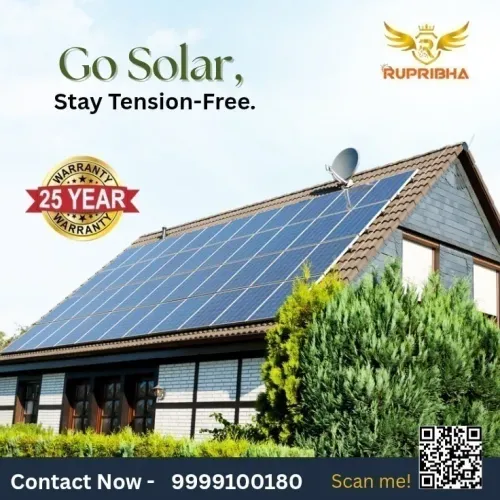
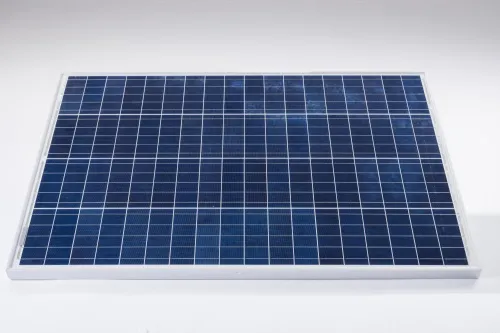
Solar panels produce direct current, but household appliances use alternating current. The system’s wiring and inverter bridge that difference, connecting solar generation to the same distribution network that already supplies your home.
- Solar panels send DC power through DC wiring to the inverter. The DC circuit includes isolators, connectors and protection sized for the array’s voltage and current.
- The inverter converts DC into grid-compatible AC, matching the utility supply’s voltage, frequency and phase. It also stops energising the grid when abnormal conditions trigger its anti-islanding protection.
- AC power passes through an ACDB or AC distribution box. This box houses equipment such as an AC isolator, circuit breaker and surge protection before the solar circuit joins the building’s distribution system.
- From the ACDB, the solar feed enters the main distribution board. Household circuits connected to that board draw from the combined supply available there, so lights, refrigerators and other appliances do not need separate “solar” sockets.
- The bidirectional utility meter sits at the connection between the home and the grid. It records electricity imported when household demand exceeds solar output and exported when solar production exceeds demand.
Solar power therefore serves the home’s operating loads as a result of normal electrical power flow, not because the inverter assigns panels to individual appliances. A 3-kilowatt load with 2 kilowatts of solar still imports 1 kilowatt; a 1-kilowatt load with 2 kilowatts available sends the surplus toward the grid.
What changes when the utility supply fails
A standard grid-following inverter stops supplying the home as soon as it detects lost utility voltage or frequency. This anti-islanding response prevents the rooftop system from energizing lines that utility workers believe are dead.
| System | Grid present | Utility outage | Power returns |
|---|---|---|---|
| On-grid system | Solar supplies energized home loads; surplus crosses the bidirectional meter to the grid, and any shortfall is imported. | Inverter disconnects and household sockets normally lose power, even in bright sunlight. Solar panels alone are not backup power. | Inverter checks acceptable voltage and frequency, then reconnects after its required delay. |
| Hybrid system | Solar serves loads, charges the battery, and exports surplus or imports a shortfall according to its controls. | The inverter isolates the home from the utility and supplies only the circuits connected to the backup or essential-load panel. Battery size and load determine runtime. | It resynchronizes with the utility, reconnects, and usually resumes charging the battery. |
| Off-grid system | It operates independently rather than exchanging power with the utility; solar, batteries, and another generator must cover demand. | The utility does not control operation. Available loads depend on stored energy and generation, so excess demand can trigger low-voltage shutdown. | It continues independent operation unless a separate transfer arrangement connects a generator or utility source. |
A hybrid system needs an island-capable inverter, correctly rated transfer or isolation equipment, and protection settings approved for the connection. Anti-islanding is a system function, not a software checkbox.
Keep refrigerators, lighting, communications equipment, and medical devices on the essential-load panel. Leave high-demand circuits off it unless the inverter and battery can support their starting and running loads.
How the meter records imports, exports and solar use
Solar power serves the live household loads on the building’s AC side before any surplus reaches the utility meter. If the inverter produces 3 kW while appliances use 4 kW, the meter records 1 kW imported; if appliances use 1 kW, it records 2 kW exported.
The meter does not identify which appliance used solar electricity. Inverter monitoring records total solar generation, while self-consumption is calculated from generation minus exported energy. A bidirectional utility meter records imported and exported energy in separate registers.
| Arrangement | What the meter records | How the connection changes |
|---|---|---|
| Net metering | Imports and exports separately, with export credits settled against imports under the utility’s rules | Surplus solar flows through the meter to the grid; the bill uses the recorded net settlement |
| Gross metering | All solar generation sent to the grid, while household consumption is measured and billed separately | Solar production is routed to the grid rather than offsetting the home’s meter reading |
| Zero export | No permitted net export; the inverter’s output is reduced when local demand is lower than solar production | A zero-export control uses current transformers or meters at the point of common coupling to regulate inverter output |
Zero-export control depends on correct CT orientation, phase association, conductor coverage and communications. Install a CT on the wrong side of the service connection and the controller can curtail useful solar or fail to control the intended flow. A utility-approved settlement method and interconnection configuration determine which arrangement you can use.
Check the home’s electrical capacity before sizing the system
A proposed system is acceptable only when the utility service, distribution equipment and wiring can carry the inverter’s AC output without exceeding their ratings. Start with the electricity bill and service documents: confirm the sanctioned load in kW or kVA, the service connection voltage, and whether the property has a single-phase or three-phase supply.
Then record the main breaker rating, the main distribution board busbar rating, conductor sizes, and the highest measured demand.
Check these details before choosing the system:
- Compare the proposed inverter’s continuous AC current with the main breaker, incoming cable ampacity and distribution-board busbar capacity. A roof with enough panel space can still need a service upgrade.
- Confirm whether the utility permits a load-side connection inside the main distribution board or requires a supply-side connection near the service connection. Check the equipment’s short-circuit or fault-current rating as well.
- Inspect spare breaker ways, cable routes, earthing, neutral size and voltage at the connection point. Long or undersized AC cables can create voltage rise, causing the inverter to reduce output or trip.
- For zero-export operation, verify CT orientation, phase association, conductor coverage, communications and fail-safe behaviour. A CT installed on the wrong side of the service connection can measure the wrong power flow.
| Supply | What to verify | Common constraint |
|---|---|---|
| Single-phase supply | Service current, phase loading and approved inverter connection | Large systems can exceed service or phase limits |
| Three-phase supply | Phase balance, neutral current and utility connection rules | A single-phase inverter may overload one phase |
| Existing service | Sanctioned load, breaker, busbar and cable ratings | Upgrade or a different connection method may be required |
Match inverter capacity to panels, loads and protection limits
A 5 kWp array does not automatically need a 5 kW inverter. Compare panel capacity in kWp with inverter capacity in kW through the DC-to-AC ratio: a ratio above 1 can keep the inverter productive for more hours, but excess midday output is clipped at the inverter’s AC limit.
| Design | What it means | Main trade-off |
|---|---|---|
| 5 kWp panels / 5 kW inverter | DC-to-AC ratio of 1.0 | Less clipping, less margin for low-light production |
| 6 kWp panels / 5 kW inverter | DC-to-AC ratio of 1.2 | Better inverter utilisation, with some peak clipping |
| 5 kWp panels / 4 kW inverter | Higher ratio of 1.25 | More clipping; suitable only after checking generation and load patterns |
Choose the inverter’s AC rating from the highest simultaneous demand, not the sum of every appliance label. For battery backup, size it for the essential-load circuits and confirm that the battery inverter, transfer switch or backup gateway can isolate those circuits from utility conductors before island operation.
Check every string against the inverter’s MPPT voltage range and current limits, including cold-weather open-circuit voltage and module short-circuit current. Ask Rupribha Electricals (OPC) Private Limited to show these figures on the proposed single-line design, not just the kW headline.
- Require DC-rated isolation, string or array overcurrent protection where needed, surge protection, grounding and bonding.
- Require AC overcurrent protection and an AC disconnect sized for the inverter output.
- Verify anti-islanding and, where local code requires it, rapid-shutdown equipment; a generic breaker does not replace these functions.
Related products
 | Solar Products A Solar Ongrid Inverter efficiently converts solar energy into usable electricity, directly feeding it into the grid. View product → |
 | Solar Products A Solar Hybrid Inverter seamlessly combines solar energy, battery storage, and grid power for efficient energy management. View product → |
Frequently asked questions
How does rooftop solar power reach household circuits?
Panels generate direct current, and the inverter converts it to alternating current before supplying the home’s distribution board and circuits.
What happens to solar power when the utility supply fails?
A standard grid-tied inverter shuts down during an outage to prevent energising utility lines. Backup operation requires equipment designed for islanded operation, such as batteries and suitable changeover controls.
How does the meter record solar imports and exports?
The meter records electricity drawn from the grid as imports and electricity sent back to the grid as exports. Solar consumed inside the home does not pass through the grid meter.
What should you check before sizing a home solar system?
Check the service connection capacity, distribution-board rating, circuit loads, panel output, inverter capacity and protection devices before choosing the system size.
Related products
 | LED Products systems combine the benefits of solar power with integrated energy storage solutions. View product → |
 | Electrical Product DCDB ACDB (AC Distribution Box) High-Quality ACDB Solutions for Safe & Efficient Solar Power Distribution Rupribha Electricals OPC Private Limited... |