Many homeowners start solar planning with a simple question — how many panels will fit on the terrace? That is useful, but it does not provide enough information to design Residential Solar Rooftop Systems effectively.
A better assessment combines electricity consumption, rooftop conditions, electrical infrastructure, and future household requirements.
Start With the Household Load
Review electricity bills from different seasons rather than relying on a single month.
Delhi NCR homes can experience substantial seasonal variation because cooling requirements rise sharply during hotter periods. A system designed around an unusually low winter bill may not reflect annual electricity use accurately.
It is also useful to identify appliances that contribute heavily to consumption.
Understand When Electricity Is Used
Solar panels generate during daylight hours, while many households have substantial evening consumption.
Understanding the load profile helps homeowners develop realistic expectations about how much solar electricity can be consumed directly and how the applicable grid arrangement may handle generation.
Evaluate the Terrace Carefully
Engineers should identify areas affected by:
- Water tanks
- Staircases
- Parapet walls
- Nearby buildings
- Antennas
- Utility equipment
- Trees
- Future construction
The objective is to identify usable, maintainable, relatively shadow-free installation zones.
Check Structural and Waterproofing Conditions
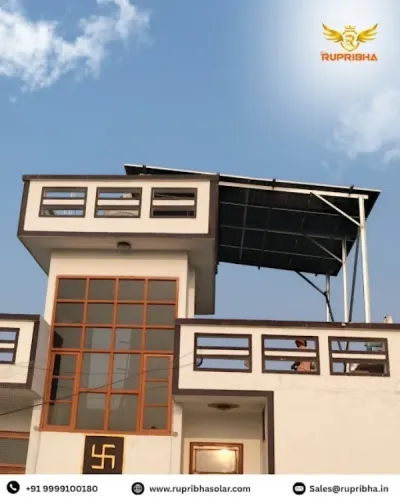
Panels and mounting structures add equipment to the rooftop and remain exposed to wind and weather.
The existing roof should therefore be assessed for relevant structural and waterproofing considerations before work begins.
If significant repair or waterproofing is already planned, completing it first can prevent unnecessary removal and reinstallation of panels.
Choose Capacity Based on Evidence
The largest system that physically fits is not automatically the right capacity.
System sizing should consider electricity consumption, roof availability, applicable regulations, expected generation, customer objectives, and future loads.
For example, a homeowner planning EV charging may want that expected demand considered during the initial design.
Installation and Initial Commissioning
After finalizing the design, the installation team typically completes mounting, module placement, DC cabling, inverter installation, AC connections, protection systems, earthing, and monitoring arrangements.
Testing should verify that the system and relevant protection devices are functioning appropriately before commissioning.
Administrative and grid-related processes may extend beyond the physical installation period.
Care After Installation
Homeowners should periodically review system generation rather than assuming that no alerts mean perfect performance.
Cleaning requirements vary according to dust, rainfall, accessibility, and roof conditions. Delhi NCR's dry and dusty periods may make periodic module cleaning useful.
Owners should avoid walking directly on modules and should use safe cleaning practices appropriate to the installed system.
Benefits of Proper Assessment
A well-assessed system can offer better roof utilization, appropriate equipment sizing, easier maintenance, improved safety planning, and more realistic generation expectations.
It also reduces the chance of discovering avoidable constraints after equipment has already been purchased.
Rupribha Electricals OPC Private Limited supports residential rooftop planning and installation across Delhi NCR, where property configurations and household electricity profiles can vary considerably.
Frequently Asked Questions
Can a small roof still support solar?
Potentially. Usable area, module specifications, shading, and desired capacity need to be assessed.
What happens if my electricity consumption increases later?
Expansion may be possible depending on roof space, inverter configuration, electrical infrastructure, and applicable rules.
Does a residential system require daily attention?
No. Routine monitoring and periodic maintenance are generally more appropriate.
The quality of residential solar planning is determined before the first panel is mounted. A detailed load and rooftop assessment provides the information needed to design a system around the household rather than forcing the household into a generic solar package.
Keywords