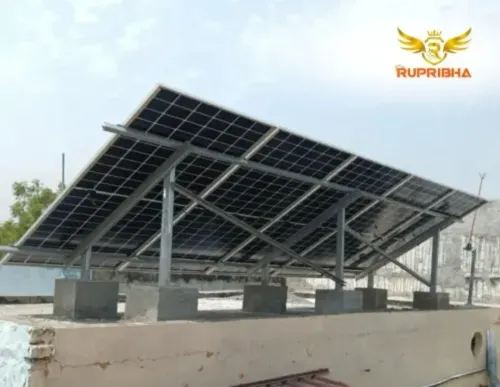
A solar installation is more than placing panels on a roof and switching on an inverter. You need to see how the installer moves from your electricity data and roof conditions to an approved design, a safe build, tested equipment and documented permission to operate.
Key takeaways
- Send 12 months of electricity bills before the survey.
- Record roof condition, shading, access, service capacity and earthing.
- Approve a design and quotation that specify equipment, layout and protections.
- Require testing results, approvals, manuals and warranty documents at handover.
What happens before the site survey?
The process starts with an initial solar enquiry, followed by an electricity-bill review and a check of the property’s electrical service. Send at least 12 months of bills when available, plus the sanctioned load, connection type and recent maximum demand for commercial premises.
1. Provide roof-access permission and state restrictions on working hours. Also identify whether the property needs a grid-connected system, battery-backed system or off-grid system. These details help the installer estimate system size and plan the survey.
2. Treat the preliminary rooftop estimate versus site-specific design as two different documents. The estimate uses assumed roof area, orientation and shading; it is not an engineering design.
The quoted capacity or price can change after the survey finds less usable roof, heavy shading, weak roofing, longer cable routes, extra earthing, upgraded protection or a utility requirement for a different meter or service arrangement.
3. Before work starts, request the proposed single-line diagram, equipment model numbers, datasheets, warranty terms, exclusions and payment stages. Ask who handles utility approvals and which documents you must provide.
Keep this information with the original quotation. It gives you a baseline for comparing the final design with the initial promise and exposes changes before procurement or installation begins.
What does the site survey team inspect and record?
A solar site survey records roof dimensions and engineering constraints, not merely a panel count. The team measures each roof plane, usable area, azimuth, tilt and parapet height, then locates the service panel and notes equipment clearances.
The azimuth and shading analysis uses observations at different times, not one midday snapshot. It records shadows from:
- Trees, water tanks, lift rooms, neighbouring buildings and parapets
- Planned panel rows and row-to-row spacing
- Seasonal changes in the sun’s path and the resulting production assumptions
The team maps access routes, lifting points, fall-protection requirements, cable paths, earthing points, drainage outlets and fire-service pathways.
Structural review covers roof age, deck or slab condition, waterproofing, corrosion, attachment points, wind exposure and load transfer into the building. It includes wind uplift, rain or snow loads and seismic effects where relevant, not only module and racking weight. Ballasted mounting still needs a roof-capacity and edge-zone wind assessment.
For an RCC roof solar installation, the survey checks whether drilling could damage waterproofing or reinforcement. On metal-sheet roofs, it checks sheet condition, purlins and compatible fasteners; on tiled roofs, it checks tile-breakage risk, rafters and replacement access.
Do not approve a roof with unsafe access, serious corrosion, inadequate load capacity, failed waterproofing or an anchoring method that cannot be sealed correctly. Request a structural engineer’s assessment when capacity or load transfer is uncertain.
How does the survey become a design, quotation and approval file?
The survey becomes a solar system design by turning roof measurements and electrical data into panel count, array layout, inverter rating, string configuration, cable routes, earthing points and protection-device specifications. A string voltage calculation checks open-circuit voltage at the minimum design temperature, when cold modules produce their highest voltage.
That worst-case value must stay below the module, cable, disconnect and inverter limits; at high module temperature, operating voltage must remain inside the inverter’s MPPT range.
| Design decision | What is checked | What failure it prevents |
|---|---|---|
| Parallel strings | Conductor ampacity, string fuses, combiner boxes and disconnect ratings against equipment listings and the module maximum-series-fuse rating | Overheating, incorrect fusing or an unsupported protection arrangement |
| Quotation | Modules, inverter, mounting, cables, connectors, surge protection, isolators, earthing, monitoring and civil work | Unpriced work or unapproved substitutions |
| Approval file | Utility application, feasibility or Delhi net metering approval stage, meter type and permission-to-operate responsibility | Delayed grid connection |
For a Delhi grid-connected system, identify whether BSES Rajdhani, BSES Yamuna or Tata Power Delhi Distribution handles the connection.
Keep these records together:
- Application, sanctioned-load information, identity and ownership or occupancy documents
- Roof-access consent, single-line diagram and equipment datasheets
- Signed quotation, named document submitter and expected permission-to-operate date
Start procurement only after design and approval responsibilities are clear. Require written approval for substitutions because a different component can change voltage, protection, mounting compatibility or warranty conditions.
What happens during mounting and electrical installation?
Mounting starts only after the crew secures safe access, material-storage areas, lifting controls and marked working zones. Fall protection and clear routes prevent workers, tools and panels from entering unprotected roof edges or public areas.
- On an RCC roof, drilled or fastened anchors use specified flashing, sealant and torque procedures. Ballasted versus drilled mounting is a structural decision: ballast depends on wind exposure, roof edges, row spacing, attachment spacing and roof capacity, not a fixed weight per panel.
- On metal-sheet roofs, installers match fasteners or clamps to the sheet profile and supporting purlins. On tiled roofs, they remove tiles carefully, attach to rafters and replace damaged tiles.
- Every penetration must preserve drainage and meet the roof manufacturer’s roof waterproofing requirements. Structurally adequate hardware can still cause leaks when the specified flashing or sealing method is skipped.
After securing the structure, installers fit the modules and route UV-resistant DC cables without low points that collect water. They label strings, maintain equipment clearances and connect the inverter, AC isolator, distribution board, surge protection and earthing conductors while keeping service and fire pathways accessible.
Where the electrical code requires rapid shutdown equipment, the system needs compatible devices, an identified initiator and an indicating device. These must bring conductors inside the defined controlled boundary to the code’s reduced-voltage state; opening the main PV disconnect alone is not enough.
Rupribha Electricals (OPC) Private Limited can help coordinate panels, protection equipment, solar structures and the datasheets needed to verify this installation design.
Related products
 | Plant BOS Solar structures are essential components for supporting solar panels, ensuring their stability and optimal performance. View product → |
 | LED Products systems combine the benefits of solar power with integrated energy storage solutions. View product → |
How are the system tests, approvals and handover completed?
Do not energize until solar commissioning tests pass on every circuit or string. Check polarity, continuity, protective-conductor continuity, insulation resistance and open-circuit voltage; measure short-circuit or operating current when the design specifies it. A total-array voltage reading will not expose a reversed module, open connector or weak string.
| Check | What it confirms | Important limitation |
|---|---|---|
| Insulation resistance test | No unacceptable leakage to earth | Isolate or follow instructions for the inverter, module-level electronics, surge-protective devices and monitoring hardware |
| I-V curve tracing | Mismatch, shading, current loss, abnormal voltage and bypass-diode behaviour | Record irradiance and module temperature for interpretation |
| Inverter verification | Voltage, frequency, ride-through and anti-islanding settings match the approved requirements | Factory defaults are not approval evidence |
The commissioning team also checks CT polarity, phase association, meter scaling, inverter time zone, string mapping and communications. Compare early production with expected output under similar irradiance and module temperature, not with a fixed daily kilowatt-hour target.
Physical completion does not permit parallel operation. The distribution company’s inspection, approval and permission to operate must be complete before grid connection.
The handover file should contain:
- As-built layouts, the single-line diagram and string identifiers
- Equipment models, serial numbers, protection settings and inverter settings
- Test results, monitoring instructions, warranties and maintenance guidance
Missing records make later fault diagnosis and warranty claims harder. Make sure field changes appear in the as-built documents before the installer closes the project.
Frequently asked questions
What information should you provide before a solar site survey?
Provide 12 months of electricity bills when available, the sanctioned load, connection type and recent maximum demand for commercial premises.
What does the site survey team inspect?
The team inspects the roof structure, usable area, shading, access routes, electrical service, earthing, cable paths, inverter location and safety conditions.
How does the survey become a solar design and quotation?
Survey measurements and electricity-use data become the system size, module layout, inverter selection, cable schedule, protection equipment, expected generation, quotation and approval file.
What happens during solar panel mounting and electrical installation?
Installers prepare the roof, secure mounting structures, fit modules, route and label cables, install inverters and protection devices, and connect the system to the building electrical network.
What is checked before the solar system is handed over?
The team checks polarity, insulation resistance, earthing, protective devices, inverter operation, monitoring, generation and grid-connection requirements before providing test records and handover documents.
Related product
 | Solar Products A Solar Off-Grid Inverter is essential for converting solar energy into usable electricity in remote locations without grid access. View product → |