
A dependable rooftop solar project starts before anyone recommends a panel: the company must prove that your roof, electricity use, budget, and backup expectations suit the proposed system. By the end, you will have a practical checklist for testing site surveys, quotations, technical design, installation records, warranties, and after-sales support.
Key takeaways
- Demand a documented site assessment before accepting system capacity.
- Review warranties, approvals, drawings, forecasts and payment terms before signing.
- Check roof attachments, waterproofing, wind exposure and maintenance access.
- Get written generation assumptions, backup limits and post-commissioning support terms.
Does the company inspect your home before sizing the system?
Yes. A reliable company starts with a documented solar rooftop site assessment before recommending panel capacity. The assessor should record roof age, structural condition, roof covering, waterproofing, attachment locations, access routes, and space for safe maintenance. A roof structural inspection matters because a weak or ageing roof may need reinforcement or replacement before installation.
The survey should also include:
- A roof shading analysis covering trees, parapets, neighbouring buildings, water tanks, and chimneys at different times of day.
- The electricity meter, main distribution board, proposed inverter position, cable routes, earthing points, and array-to-inverter distance.
- Your last 12 months of bills, daytime consumption, roof area, backup needs, sanctioned load for solar system, and the distribution company’s connection limit and net-metering process.
A large roof does not justify a large system by itself. Limited daytime use can reduce the value of exported electricity, while a weak roof can make structural work the first priority.
| Assessment evidence | What it should contain | Warning sign |
|---|---|---|
| Documented survey | Measurements, photographs, shade map, equipment locations | Only a brochure or panel package |
| Load review | Bills, daytime demand, backup requirements, sanctioned load for solar system | Capacity chosen from roof size alone |
| Connection check | Local approval limit and net-metering steps | No distribution-company confirmation |
If the company has not seen the roof, reviewed your bills, or checked local connection rules, it is selling equipment before diagnosing the project.
Which documents should you receive before signing?
Before signing, demand an itemised quotation naming every module and inverter model, quantity, wattage, mounting material, corrosion protection, cable specification, protection device, monitoring equipment, labour charge, taxes, net-metering work, commissioning, and after-sales service. Compare it line by line, not by total price.
A cheaper offer may omit DC or AC surge protection, string fuses, earthing, lightning protection, a generation meter, scaffolding, roof repairs, or application fees.
Request these documents:
- A single-line diagram, module and inverter datasheets, installation scope, payment schedule, projected generation, exclusions, and handover obligations.
- Model-specific evidence for IEC 61215 design qualification, IEC 61730 module safety certification, and IEC 62941 production-quality controls where claimed. Ask for the certificate scope, factory identity, model variants, surveillance evidence, and reports covering potential-induced degradation, damp heat, thermal cycling, humidity-freeze, hail, UV, and mechanical-load testing. A brochure logo does not prove that every quoted model passed every test.
Use this solar quotation checklist to expose omissions:
| Item | Offer A | Offer B | Verify |
|---|---|---|---|
| Protection | DC and AC surge protection, string fuses, earthing | AC protection only | Confirm ratings and quantities |
| Site work | Scaffolding, roof repairs, application fees | Excluded | Price each item separately |
| Handover | Generation meter, commissioning records, monitoring access | Not stated | Obtain written obligations |
A certificate is not a factory-quality guarantee, and a test report is not proof of lifetime performance. Get each promise attached to the exact model and included in the signed scope.
Can the proposed design survive real roof and weather conditions?
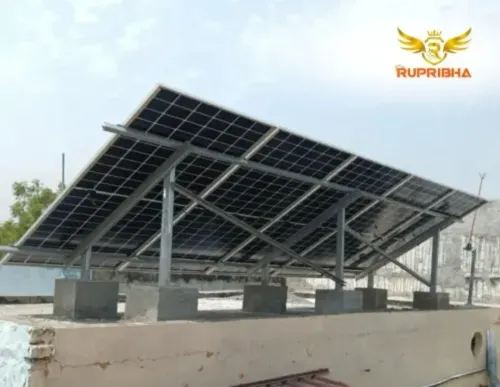
A reliable design proves that the roof, wiring, and protection system will survive local conditions, not merely produce power on a sunny day. Ask for a solar rooftop structural design based on the roof covering, attachment spacing, corrosion category, wind uplift calculation, and snow-load assumptions where relevant.
A structural calculation or stamped attachment design is stronger evidence than a generic rail load rating.
Use this checklist before approving the design:
- Request the array layout, attachment points, waterproofing method, and details showing how penetrations will be sealed.
- Require a PV string voltage calculation using the site’s minimum design temperature. Cold-weather open-circuit voltage must stay below the inverter’s maximum DC voltage; hot-weather operating voltage must remain inside its MPPT range.
- Ask the designer to state the string-fuse basis, DC surge-protective-device voltage rating, earthing method, and compliance with IEC 60364-7-712. DC surge protection for solar systems must follow IEC 61643-31.
- Confirm that every PV connector is an approved mating pair. Similar-looking connectors from different brands or revisions can cause resistance, arcing, or water ingress.
- At handover, obtain photographs of concealed attachments, torque records where used, cable-support details, polarity and insulation-resistance results, earthing results, inverter settings, and the final as-built single-line diagram.
These records expose shortcuts that a system producing electricity on its first day can conceal.
Are the generation forecast and backup promise technically honest?
Ask for the solar generation estimate P50 P90, not just one attractive annual number. P50 is the expected or median-style case; P90 is a more conservative output that the system has a 90% probability of exceeding. The proposal should show its assumptions for:
- Roof orientation, tilt, shading, soiling, temperature, snow where relevant, and inverter clipping
- System losses, availability, curtailment, and annual degradation
Compare those assumptions with your last 12 months of bills and your daytime load. A system that produces well but exports most energy can deliver weaker savings than its forecast suggests.
| Option | Grid-outage behaviour | What it requires |
|---|---|---|
| On-grid solar | Shuts down during an outage | Approved backup equipment and a separate protected-load arrangement for backup power |
| Hybrid solar | Uses batteries for selected loads | Solar generation, battery storage, controls, and a protected backup panel |
| Off-grid solar | Operates without the grid | Enough generation and storage for night-time use, cloudy periods, and peak loads |
For batteries, compare usable battery capacity rather than nominal capacity, chemistry, round-trip efficiency, installation location, ventilation, replacement cost, and the solar battery cycle warranty. Identify every load connected to the protected panel, then ask who pays battery labour and freight during a warranty claim.
If you want bill reduction without outage backup, battery cost and eventual replacement can make hybrid solar the wrong fit. Low daytime consumption, severe shading, or an unsuitable roof can weaken rooftop solar economics altogether.
What proves the company will support the system after commissioning?
Support is proven by documents and procedures agreed before payment, not by a promise made after the price is settled. Treat solar after-sales service as part of the purchase.
1. Ask for references to comparable homes, photographs of completed work, sample solar commissioning records, monitoring access, escalation contacts, and a written response-time commitment. The company should explain firmware support, diagnostic access, labour, shipping, and inverter replacement support, including who supplies a replacement and how quickly.
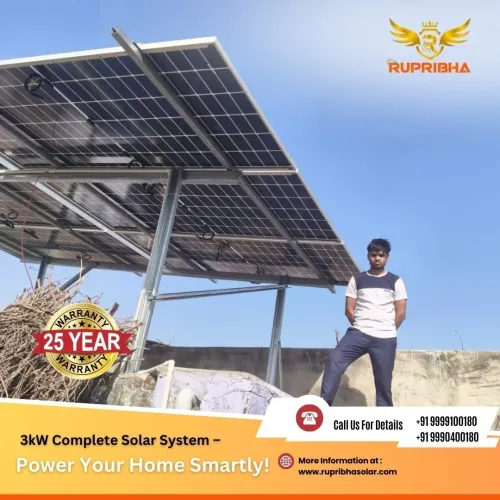
2. Request the solar warranty claim process in writing. Read the module product warranty separately from its performance warranty, then check the initial-power definition, stepped annual degradation, claim threshold, remedy, freight responsibility, labour responsibility, and whether coverage survives a change of ownership.
3. Apply the same test to the inverter, mounting structure, workmanship, and battery. A nominal 10-year inverter warranty has limited value if there is no local stock, replacement procedure, firmware support, or clear allocation of labour and freight.
4. Require the company to state what it will submit to the distribution company, what it will maintain, and what remains your responsibility.
For a Delhi homeowner comparing Rupribha Electricals (OPC) Private Limited with other installers, ask each supplier to provide this evidence for your roof, bill profile, connection process, installation scope, and support arrangement before you sign.
A product catalogue cannot prove continuity of service; a documented handover and claims process can.
Frequently asked questions
Should a solar company inspect your home before sizing the system?
Yes. The assessor should document roof age, structural condition, roof covering, waterproofing, attachment locations, access routes and safe maintenance space. Reinforce or replace a weak or ageing roof before installation.
Which documents should you receive before signing a solar contract?
Request the proposed system design, equipment specifications, generation forecast, warranties, installation scope, payment schedule, approvals, exclusions and post-commissioning support terms.
How can you check whether a rooftop solar design will withstand real conditions?
Review the roof attachment method, waterproofing details, wind exposure, drainage, cable routing, equipment clearances and maintenance access. Ask how the design addresses the roof’s covering and structural condition.
What should a technically honest solar generation forecast include?
Check the assumed panel capacity, site orientation, tilt, shading, weather data, system losses and expected seasonal output. Treat backup promises separately by confirming battery capacity, usable energy, supported loads and runtime assumptions.
What proves a solar company will support the system after commissioning?
Get written warranty terms, commissioning records, monitoring access, fault-response contacts, maintenance responsibilities, inspection intervals and the process for handling equipment or installation defects.