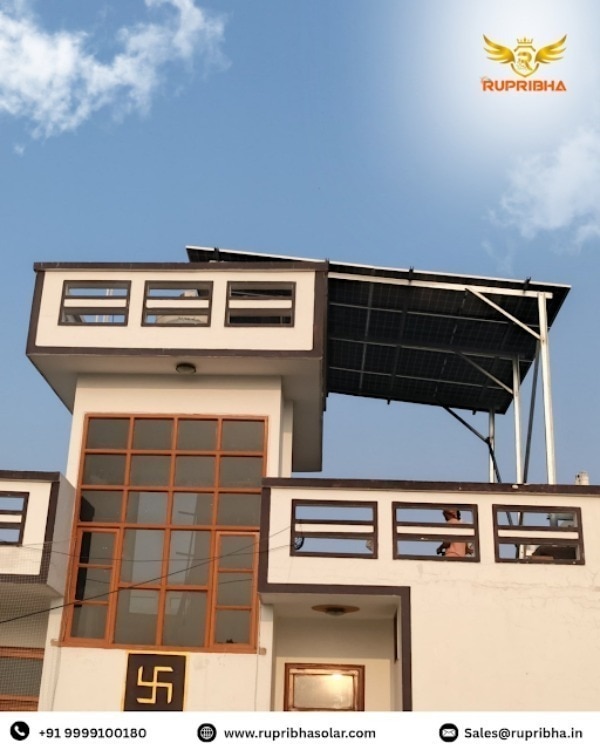
A useful system size starts with the electricity your home actually consumes, not a standard 3 kW or 5 kW label. By the end, you will be able to turn several months of bills into an initial kW estimate, test that estimate against roof constraints, and identify when batteries, electrical upgrades, or a different design are needed.
Key takeaways
- Use at least 12 consecutive bills to calculate annual household kWh.
- Choose annual bill offset or daytime self-consumption before sizing panels.
- Reduce the design for shade, roof limits, and usable panel layout.
- Check service voltage, connection limits, and battery power before ordering.
Turn your electricity bills into an annual solar requirement
Add the billing-period kWh from at least 12 consecutive residential electricity bill statements to estimate annual household consumption. Then divide that annual total by a site-specific solar yield to get a first-pass PV capacity:
- Record each month’s monthly kWh, including months with air-conditioning, electric heating, water-pump use, or electric cooking.
- Add the 12 monthly figures to obtain annual consumption in kWh/year.
- Divide annual kWh/year by the modeled yield in kWh/kWdc/year. For example, 6,000 kWh divided by 1,200 kWh/kWdc gives a preliminary 5 kWdc array.
Use 12 months rather than one unusually low or high bill. If you have fewer statements, mark the missing seasonal loads and avoid treating the partial total as a full-year requirement.
Read the bill’s sanctioned load and connected load, but do not use either as annual energy consumption. Sanctioned load is the supply capacity approved by the utility; connected load is the total rated capacity of appliances recorded for the premises.
Demand charges, if shown, and time-of-use consumption add context but do not replace the kWh total.
Do not choose the yield from a generic peak-sun-hours figure alone. The model must account for your site’s solar resource, roof orientation, horizon shading, temperature, soiling, wiring, mismatch, inverter losses, and availability. Compare monthly production with monthly use afterward: annual matching can still leave winter purchases and summer exports.
Choose between annual energy offset and daytime self-consumption
Choose annual energy offset when your priority is to match yearly grid purchases; choose daytime self-consumption when exported solar earns little or your connection has an export cap. The largest array is not automatically the best-value system.
Compare monthly demand with monthly solar production before fixing capacity. Seasonal electricity use from air-conditioning, heaters, pumps, or electric cooking can make an annual match misleading: summer surplus can coexist with winter grid purchases. If winter independence matters, size against the critical months, accepting that this creates more summer exports or requires storage.
| Sizing objective | What to measure | How it changes the plant size |
|---|---|---|
| Annual energy offset | Total yearly kWh and modeled yearly PV yield | Size to offset annual consumption, then check monthly imports and exports |
| Daytime self-consumption | Solar output against loads from roughly 9 a.m. to 4 p.m. | A smaller array can deliver better value if excess exports receive low compensation |
| Evening or overnight supply | Time-of-use consumption, interval-meter data, and battery losses | Keep PV tied to actual load, then add battery capacity only for usable stored energy |
Time-of-use consumption changes the value of each kilowatt-hour: midday solar is less useful if your high-rate usage occurs after sunset. Two homes with identical annual kWh can therefore need different arrays and batteries. Use smart-meter intervals or an end-use load model to identify cooking, water heating, cooling, and vehicle-charging schedules.
Demand charges, fixed charges, export limits, and interconnection rules can also punish an oversized array. Curtail the design when extra production only increases low-value exports.
Match the calculated capacity to panels, roof area, and shade
A 10 kW DC target does not mean 10 kW will fit on your roof. A 400 W panel requires 25 modules, so estimate panel count by dividing the target kW DC by each panel’s kW rating, then measure the roof area for solar panels after removing unusable sections.
Map every roof obstacle before counting modules. Chimneys, dormers, parapets, skylights, vents, access paths, and required edge clearances can reduce the installable footprint. Keep panels off weak or shaded sections rather than forcing the full calculated capacity into a poor layout.
The inverter sets a separate limit. Its rating is measured in kW AC, while the panel array is measured in kW DC. A design may pair more kW DC with a smaller inverter to reduce cost, accepting some midday clipping; excessive oversizing wastes panel capacity.
Check the inverter’s DC input limit, MPPT voltage range, maximum current, main-breaker and busbar limits, conductor ampacity, and utility export cap before approving the layout.
Shade is not simply lost roof area. A chimney or tree can shade particular modules for only part of the day, causing mismatch and bypass-diode activation across a string. Use an hourly or sub-hourly shade model that includes roof obstructions and the horizon, then compare its predicted kWh production with the unshaded design.
Panel-level electronics can reduce mismatch, but they cannot create sunlight or recover output from a shaded roof.
Check voltage, service limits, and battery power before finalising size
An array that fits annual consumption can still be electrically oversized. Before approving the design, check the inverter’s DC limits, the home’s electrical service capacity, and the loads you expect the battery to support.
| Check | Verify | What can force a change |
|---|---|---|
| String voltage | Cold-weather, temperature-corrected open-circuit voltage (Voc) stays below the inverter’s maximum DC voltage | Remove modules from a string or choose a higher-voltage inverter |
| MPPT voltage range | Hot-weather operating voltage (Vmp) remains inside the inverter’s MPPT voltage range | Change string length, module count, or inverter |
| Electrical service capacity | Main-breaker rating, busbar loading, conductor ampacity, grounding, rapid-shutdown equipment, and utility export limit | Reduce inverter or export power, reconfigure the connection, or upgrade service |
| Backup loads | Starting surge and continuous watts for pumps, refrigerators, air conditioners, heaters, and cooking equipment | Exclude loads, add inverter capacity, or use load management |
| Battery | Usable battery capacity in kWh, continuous and surge kW, and inverter limits | Increase battery or inverter size, or shorten the backup target |
Do not size backup from battery nameplate kWh. State-of-charge reserves and charge/discharge losses reduce the usable AC energy available to your circuits, so divide required backup energy by battery-and-inverter efficiency instead of multiplying nominal kWh by autonomy hours.
A battery with enough energy for overnight use can still trip when a pump starts. Compare its continuous and surge ratings with the backed-up panel, then test the largest simultaneous load.
Use the numbers to compare a practical system design
A proposed 5 kW array is practical only if its bill savings, electrical limits, and end-of-life output still work together. Compare the quote using the same annual household consumption and tariff assumptions, not its panel nameplate alone.
| Measure | Smaller, self-consumption design | Larger, export-oriented design |
|---|---|---|
| Annual value | More daytime use is served directly; fewer kWh are exported | More annual generation, but extra output depends on solar export compensation |
| Inverter behaviour | Less inverter clipping, with lower equipment and interconnection demands | More clipping can occur at midday; verify the DC-to-AC ratio |
| Export limit | Easier to remain below the utility’s kW or annual kWh cap | Can waste production after the export cap or require approval |
| Economics | Compare lower capital cost against bill savings and fixed charges | Include export credits, demand charges, time-of-use rates, and any battery cost |
| Long-term output | Use the module’s warranted degradation curve | Do not treat first-year modeled output as lifetime output |
Ask for the inverter datasheet showing maximum DC voltage, MPPT voltage range, maximum input current, AC rating, and permitted PV oversizing. Check the module datasheet for temperature coefficients, then confirm cold-weather string Voc stays below the inverter limit.
Rupribha Electricals (OPC) Private Limited can be one quote to scrutinise, but request these documents before comparing it with another supplier.
Apply PV degradation to each future year; a 0.5% annual assumption is a planning reference, not a substitute for the manufacturer warranty. Reject a design whose payback depends on uncapped exports, unexplained clipping, or output that ignores degradation.
Related products
 | Solar Products A Solar Ongrid Inverter efficiently converts solar energy into usable electricity, directly feeding it into the grid. View product → |
 | Solar Products A Solar Hybrid Inverter seamlessly combines solar energy, battery storage, and grid power for efficient energy management. View product → |
Frequently asked questions
How do you calculate the first-pass size of a residential solar system?
Add the kWh from at least 12 consecutive bills, then divide annual consumption by the site-specific solar yield. The result is an initial PV capacity estimate.
Should a home solar system offset annual consumption or serve daytime loads?
Choose annual energy offset when your goal is to match yearly electricity use. Choose daytime self-consumption when you want to use more solar power directly and export less energy.
How do roof area and shade affect solar system size?
Count only usable roof space, account for panel dimensions and access routes, and reduce expected output for shade from trees, parapets, tanks, and nearby buildings.
What electrical checks are needed before finalising a solar system size?
Check the home’s supply voltage, main service rating, inverter output, grid-connection limit, and battery power rating against household loads and the proposed system.
Related products
 | Solar Products A Solar Off-Grid Inverter is essential for converting solar energy into usable electricity in remote locations without grid access. View product → |
 | Solar Products ₹200000 3KW Solar power plant subsidy based system in Delhi, you will get subsidy up to 78000/-Rs. View product → |
 | Solar Products Multicrystalline Modules are highly efficient and durable photovoltaic panels designed for optimal energy conversion. View product → |
 | Solar Products Solar Polycrystalline Modules are efficient and cost-effective solar panels made from multiple silicon crystals. View product → |